Brand in the Built Environment: Why Space Drives Performance
MARCH 2026
Brand is not a logo, nor is it confined to screens. It is an experience. In physical environments, it becomes spatial and behavioural, influencing how people navigate, understand, and trust an organization in real time.
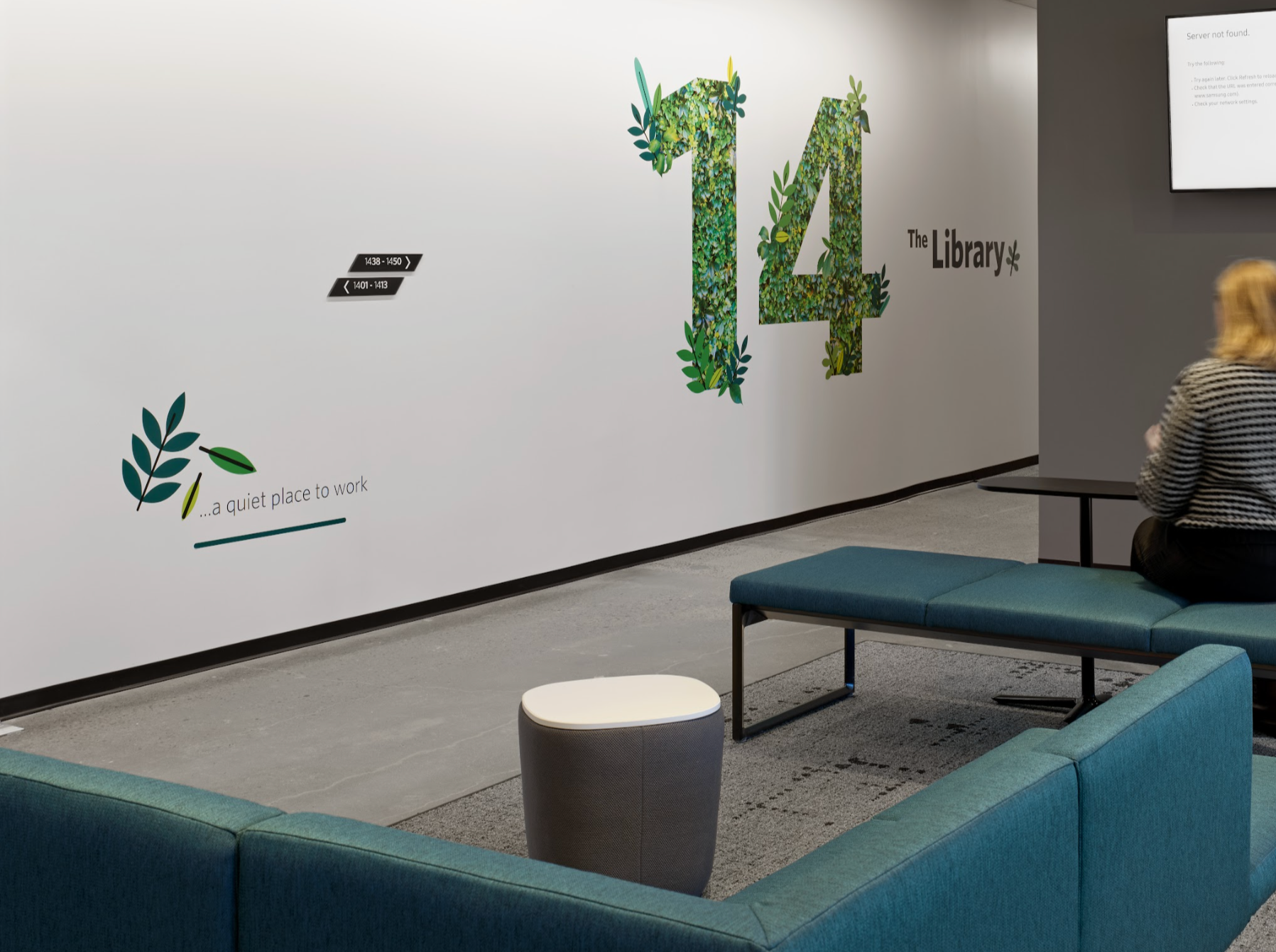
Brand is often discussed in the context of campaigns, products, and digital interfaces. But for organizations operating at scale, a significant part of brand experience happens in physical spaces.
Workplaces, transit systems, and public environments are not passive backdrops. They are active communication systems. When designed intentionally, they reinforce clarity, consistency, and trust. When they are not, they introduce friction, confusion, and misalignment.

Space is a communication system, not a container.
Physical environments communicate constantly through signage, material, scale, and spatial hierarchy. Users don’t read these elements the way they read a screen. They interpret them while moving.
Research in environmental psychology shows that people rely on spatial cues and visual hierarchy to make rapid navigation decisions, especially in unfamiliar environments¹.
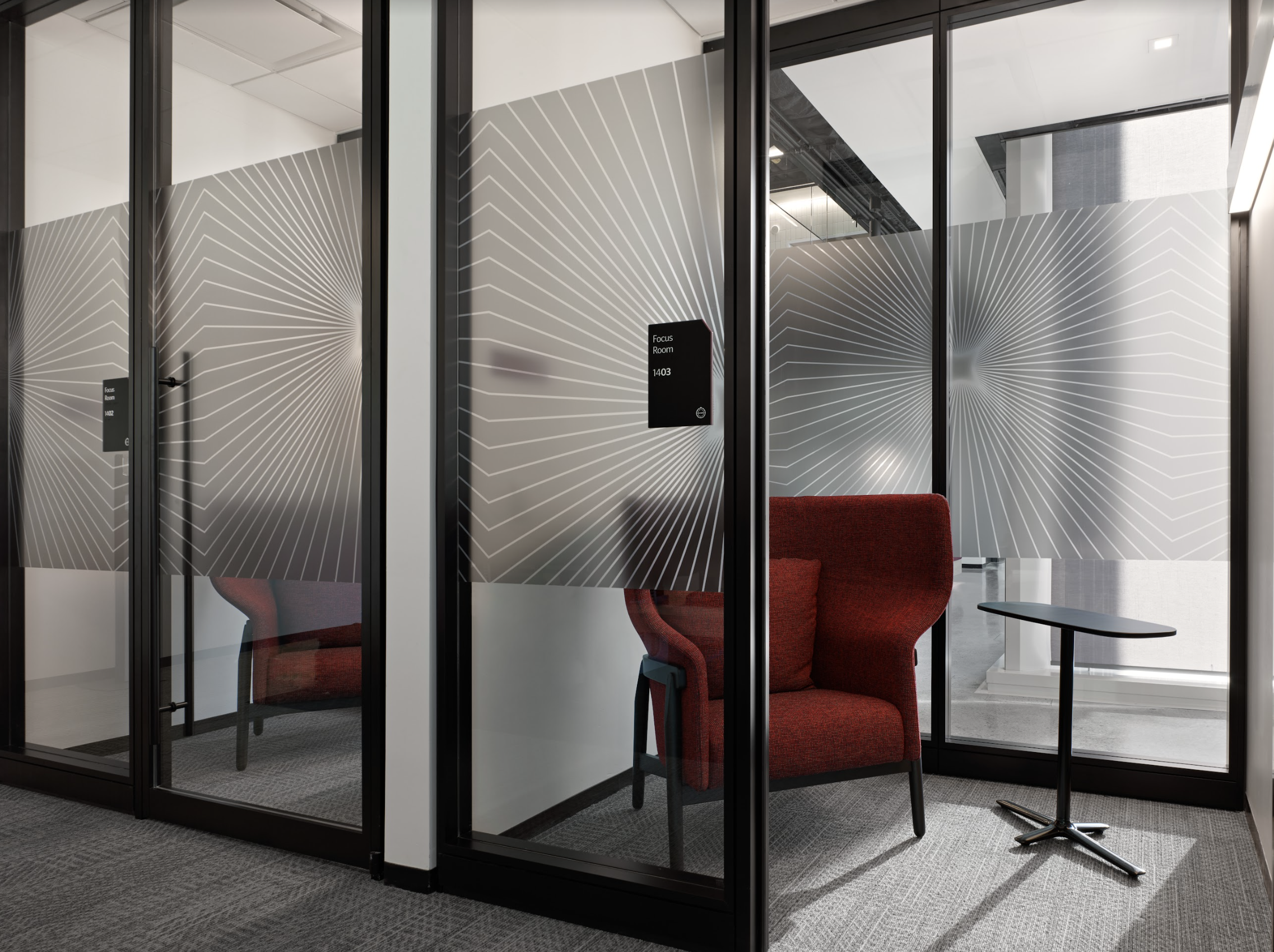
Consistency across environments builds trust at scale.
Inconsistent environments create cognitive friction. Studies show that 81% of consumers say they need to trust a brand before engaging², and that consistent brand presentation increases revenue by up to 23–33%³.
In physical environments, inconsistency shows up as mismatched signage systems, unclear navigation patterns, and/or inconsistent tone across spaces. In large-scale environments like Amazon workplaces or CIBC Square, consistency is not just visual — it’s operational. Systems must translate across floors, departments, and building types.
Without a system, the experience breaks.
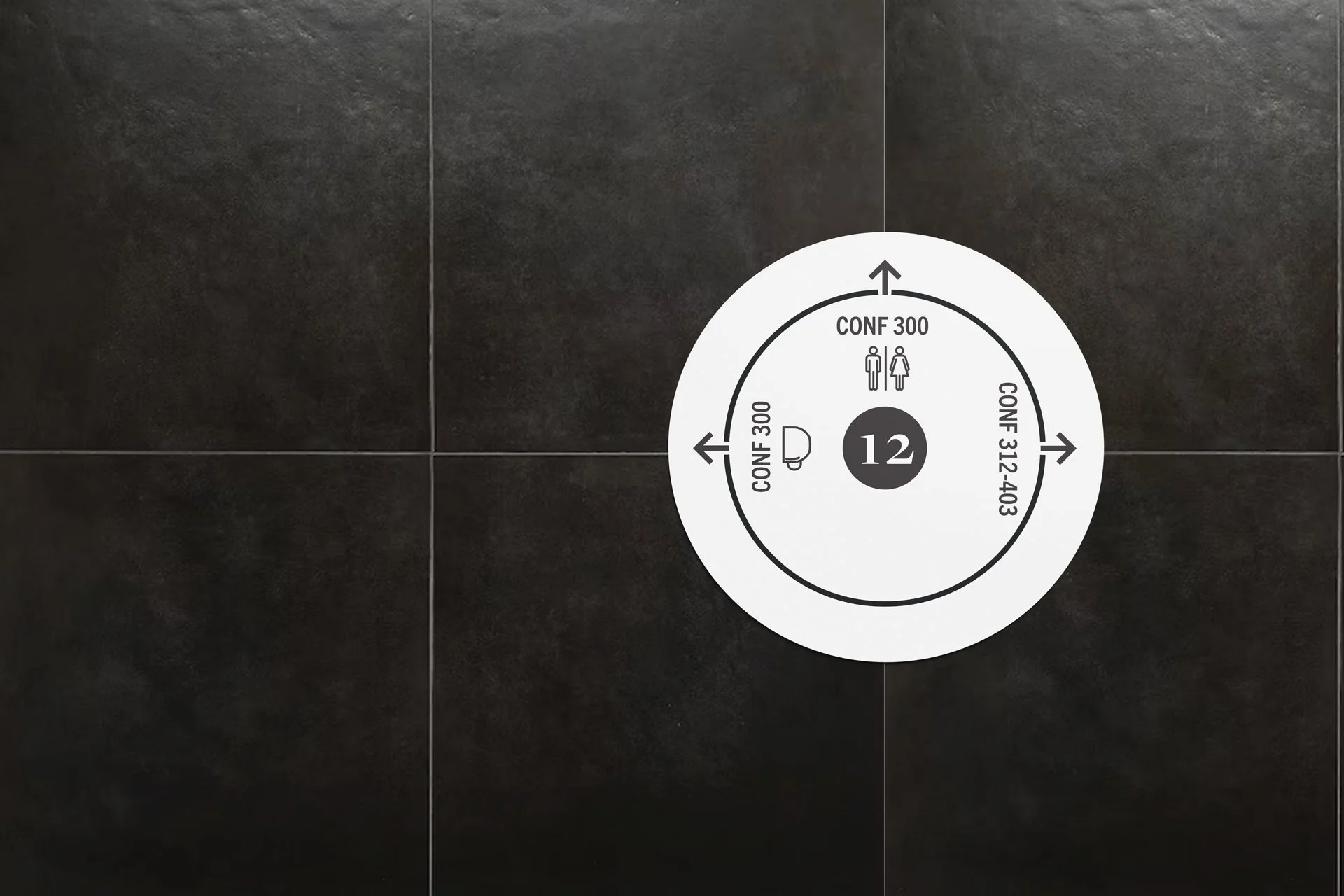
Wayfinding is brand in action.
Wayfinding is one of the most direct expressions of brand in space. It answers questions: Where am I? Where do I go? How do I get there?
When done well, it reduces stress, increases efficiency, and reinforces clarity. Research shows poor wayfinding can increase travel time by up to 30% in complex buildings, and also significantly increase user frustration and perceived difficulty⁴.
Wayfinding systems are not separate from brand. They are the functional layer of brand communication. They require typographic discipline, consistent iconography, and spatial logic.
Accessibility strengthens spatial system.
Designing for accessibility improves the system for everyone. Standards such as AODA and WCAG emphasize core design components including contrast, legibility, hierarchy, and clarity of information⁵.
Research consistently shows that accessible environments improve usability for all users, reduce errors and confusion, and increase overall satisfaction⁶.
Through my work on Apple’s Accessibility in Architecture & Design standards, I saw how an inclusive approach reinforces system-level thinking and ensures consistency across environments, products, and interfaces. Accessibility is not an add-on, it is an enforcement of discipline within the system.
Brand in physical space is often underestimated because it is less measurable than digital performance. But its impact is immediate and continuous. Every surface, sign, and spatial decision contributes to how a brand is understood and experienced.
As organizations expand across environments, the role of design shifts from creating isolated moments to building systems that hold together under scale.
The strongest brands are not only seen, they are navigated with ease.
Selected research and references:
¹ Passini, Romedi. Wayfinding in Architecture. 1992.
² Edelman Trust Barometer. Global Report. 2020.
³ Lucidpress (Marq). The State of Brand Consistency Report. 2019.
⁴ Arthur, Paul & Passini, Romedi. Wayfinding: People, Signs, and Architecture. 1992.
⁵ World Wide Web Consortium (W3C). Web Content Accessibility Guidelines (WCAG) 2.1. 2018.
⁶ Steinfeld, Edward & Maisel, Jordana. Universal Design: Creating Inclusive Environments. 2012.